
Managed IT vs Break-Fix for Growing Florida Teams
Managed IT vs Break-Fix for Growing Florida Teams
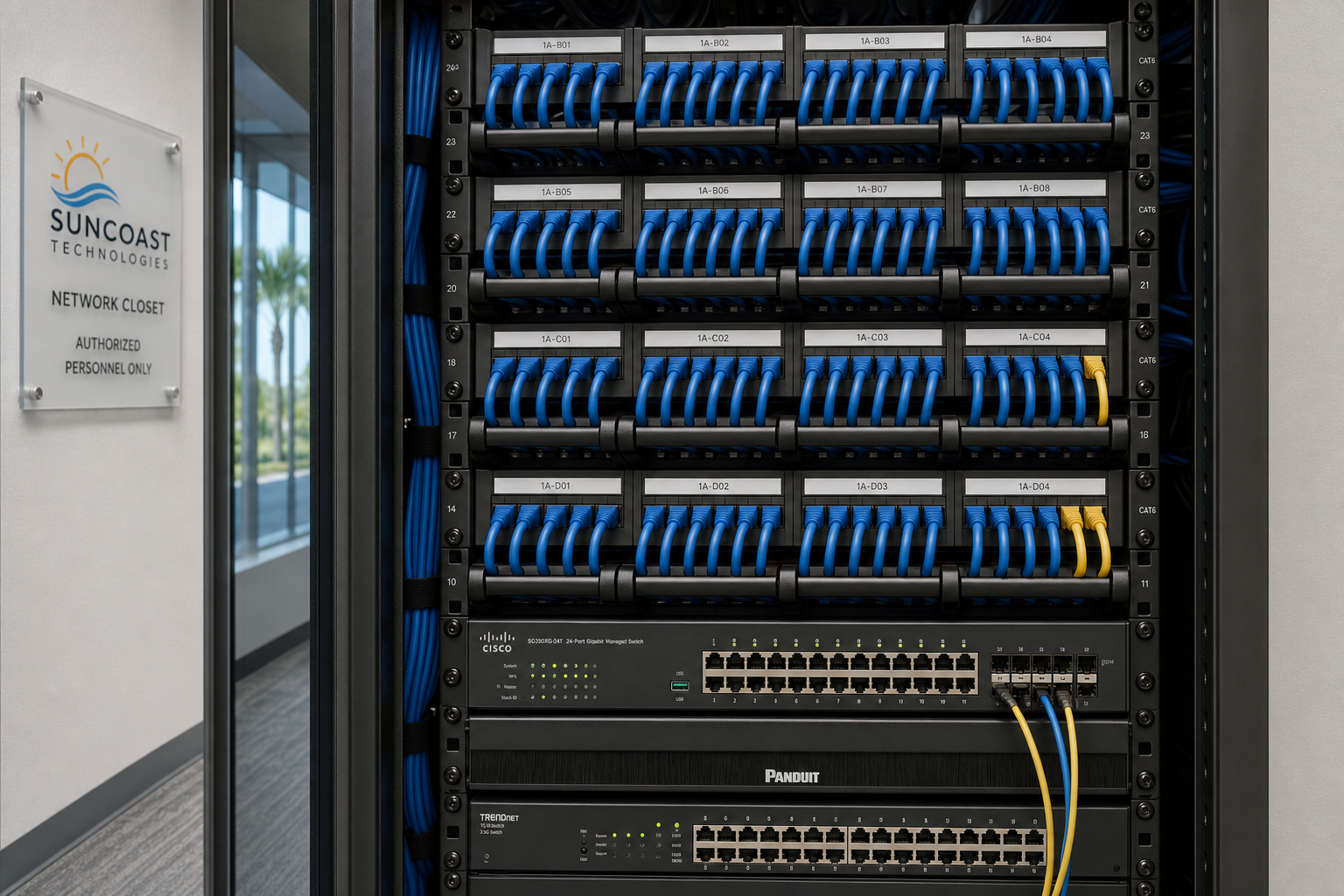
If your business has hit a wall with recurring outages, slow vendor response, or a network closet that looks like a bowl of spaghetti, you already know something has to change. The real question is whether a managed IT model is the right move — or whether break-fix still makes sense for where your team is right now. This guide gives you a straight answer, built for Florida business owners who are done guessing.
What Is Break-Fix IT Support?
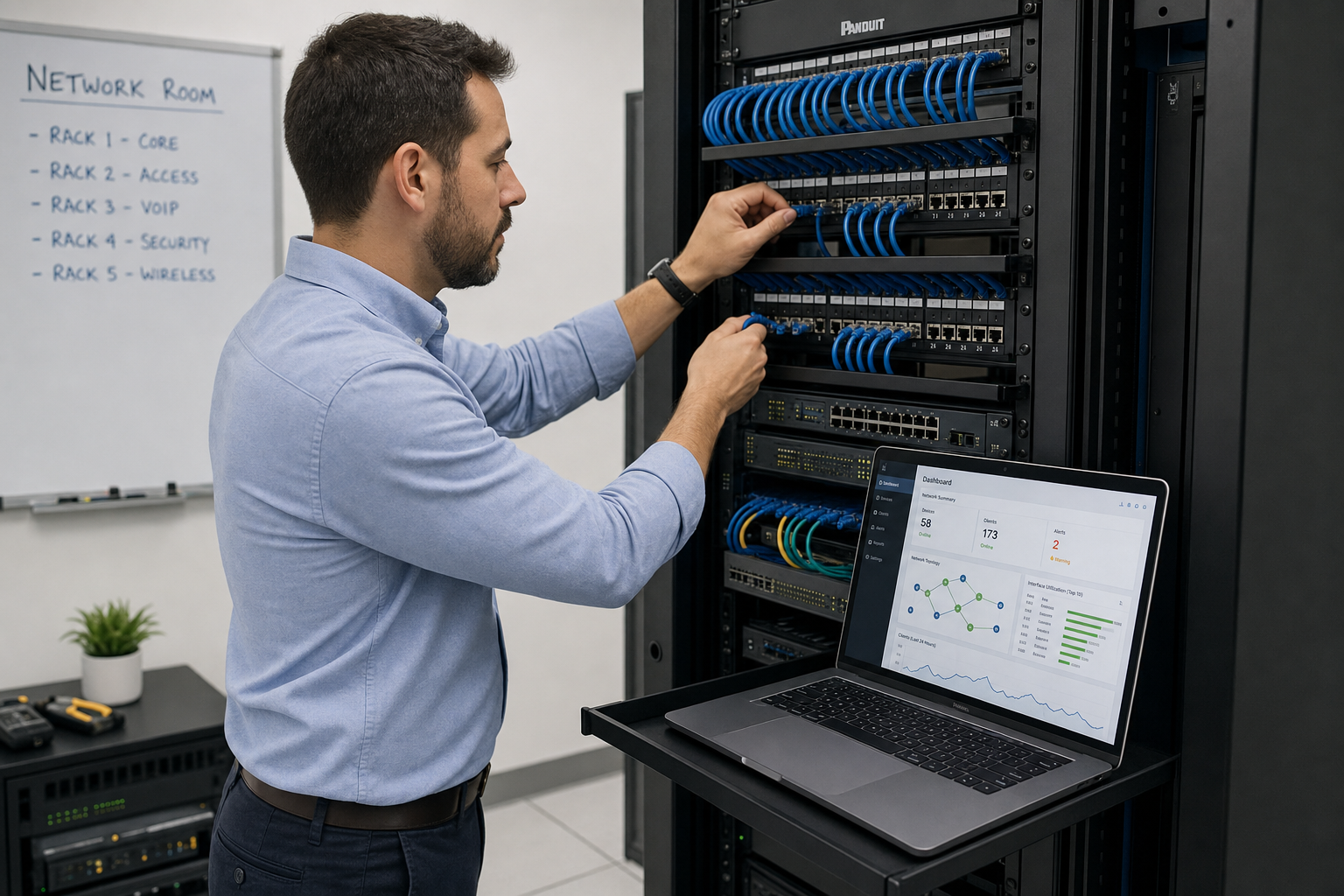
Break-fix is exactly what it sounds like. Something stops working, you call someone, they fix it, you pay the bill. There is no ongoing relationship, no monitoring, and no one watching your network between calls. For a solo operator with one laptop and a simple internet connection, this model is fine. For a team of ten or more people sharing servers, cloud apps, VoIP phones, and a structured cabling infrastructure, it is a liability.
The core problem with break-fix is that it is entirely reactive. By the time you call, the damage is already done — whether that is a downed server, a ransomware infection, or a phone system that has been dropping calls for three weeks because nobody flagged the misconfigured switch.
What Is Managed IT?
Managed IT means a provider takes ongoing responsibility for your technology environment under a flat monthly agreement. The Mynians base includes proactive security, continuous monitoring, and automated patching. User-requested helpdesk labor, vendor troubleshooting, and strategic projects are billed separately. You know what you are paying each month. You have a real team that knows your environment. And when something does go wrong, someone is already watching.
At Mynians, managed IT also means your VoIP phone system, structured cabling, and cybersecurity posture are handled by the same team — not three separate vendors who blame each other when a call drops or a switch goes offline.
Side-by-Side Comparison
| Factor | Break-Fix | Managed IT (Mynians) |
|---|---|---|
| Pricing model | Pay per incident — unpredictable | Published MSP base; helpdesk labor billed separately |
| Response approach | Reactive — after the problem hits | Proactive — monitoring catches issues early |
| Network documentation | Rarely maintained | Clean, current, and accessible |
| Cybersecurity | Usually an afterthought | Built into the baseline |
| VoIP and cabling | Separate vendors, separate bills | One team handles IT, VoIP, and cabling |
| Vendor coordination | You manage it yourself | Mynians handles vendor relationships |
| Technician location | Varies — often remote or outsourced | Real local techs, Central Florida-based |
| IT strategy | None — no long-term planning | Strategy and roadmap work quoted separately |
| Best for | Very small, low-risk environments | Growing teams with real uptime requirements |
Who Managed IT Is For
Managed IT is the right fit if any of the following describe your situation:
- You have a team of five or more people depending on shared systems every day.
- You have experienced at least one outage in the past year that cost you billable time, client trust, or staff productivity.
- You are storing sensitive client data, financial records, or anything that would be a problem if it were exposed or lost.
- You are running Microsoft 365 or Google Workspace and nobody is actively managing user access, backups, or security policies.
- You have a phone system that drops calls, has poor audio quality, or is tied to a provider who takes days to respond.
- You are opening a new office, adding staff, or moving locations and need someone to handle the cabling and network buildout properly.
- You are tired of being the person who has to call three different vendors and figure out whose fault the problem is.
Who Break-Fix Might Still Work For
Break-fix is not always the wrong answer. It may still be appropriate if:
- You are a solo operator or a two-person team with minimal shared infrastructure.
- Your work is entirely cloud-based with no on-premise servers, no VoIP system, and no structured cabling to maintain.
- Downtime of a few hours has no meaningful financial impact on your business.
- You have a trusted in-house IT person who handles day-to-day issues and only needs occasional outside help for specific projects.
If none of those describe you, break-fix is probably costing you more than you realize — in emergency rates, lost productivity, and the slow accumulation of undocumented, unpatched, and unsecured infrastructure.

Why the Florida Business Environment Changes the Math
Florida businesses face a specific set of IT pressures that make proactive management more valuable than the national average might suggest.
Power and weather events
Central Florida, Tampa, Miami, and Jacksonville all sit in hurricane and severe storm corridors. Power surges, brief outages, and extended downtime events are not hypothetical — they happen. A managed IT provider with proper UPS monitoring, backup configurations, and documented recovery procedures is worth significantly more after a storm than a break-fix vendor you have to track down.
Fast-growing teams
The Orlando metro and surrounding areas like Winter Garden have seen consistent business growth. When you add staff quickly, your IT environment grows faster than your documentation does. Managed IT keeps that under control — new users get provisioned correctly, access gets assigned properly, and your network doesn’t quietly become a security gap.
Vendor fragmentation
Many Florida businesses end up with a patchwork of vendors: one for internet, one for phones, one for IT support, and a cabling contractor they called once three years ago. When something breaks, everyone points at someone else. Mynians handles managed IT, hosted VoIP, and structured cabling under one roof — which means one call, one team, and no finger-pointing.
What Goes Wrong When You Stay on Break-Fix Too Long
The risks of staying on break-fix past the point where your business has outgrown it are real and specific.
Cybersecurity gaps compound quietly
Without regular patching, endpoint monitoring, and access reviews, your environment accumulates vulnerabilities. The Cybersecurity and Infrastructure Security Agency (CISA) consistently identifies unpatched systems and poor access controls as the leading entry points for business-targeted attacks. Break-fix providers don’t patch proactively — they show up after the breach.
No documentation means no recovery
If your IT person leaves, gets sick, or simply isn’t available when your server goes down, and there is no documentation of your network topology, credentials, or configurations, you are starting from scratch. Managed IT keeps that documentation current and accessible to the team responsible for your uptime.
Emergency rates are expensive
Break-fix vendors charge more for urgent calls, after-hours work, and complex problems. A single emergency visit can cost more than a month of managed IT coverage — and it still doesn’t fix the underlying issue that caused the problem.
VoIP problems get ignored
Poor call quality, dropped calls, and voicemail systems that don’t work are often treated as phone-provider problems. But most VoIP issues are network issues — QoS settings, VLAN configuration, bandwidth allocation. If your IT support and your phone provider are separate, neither one owns the problem. The FCC’s guidance on VoIP reliability makes clear that network quality is foundational to phone system performance.
What to Expect When You Switch to Managed IT
The transition from break-fix to managed IT is not complicated, but it does require a real onboarding process. Here is what a responsible handoff looks like:
Discovery and documentation
A good managed IT provider starts by documenting what you actually have — every device, every user, every application, every cable run. This is not optional. Without it, you are just paying for reactive support with a monthly label on it.
Security baseline
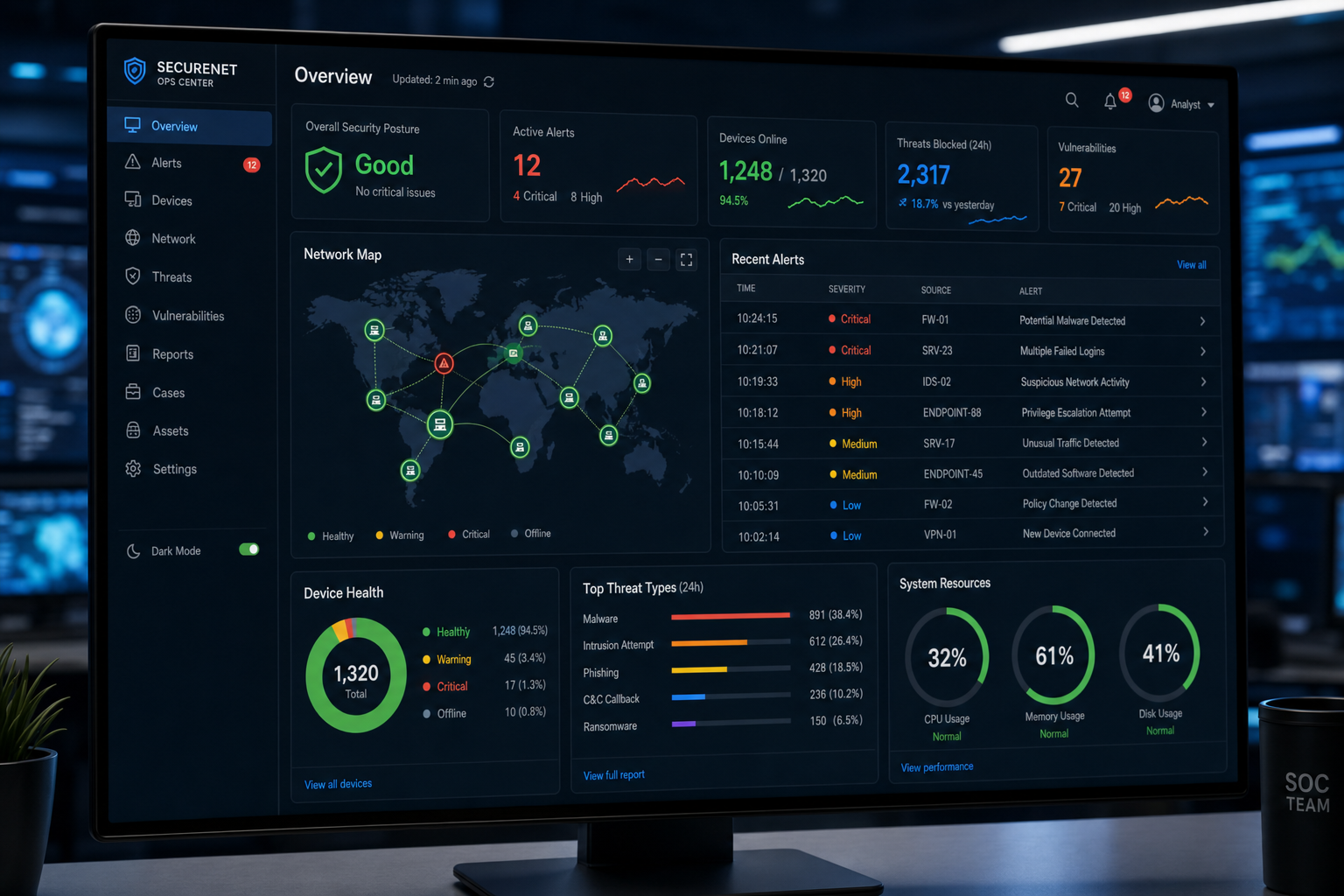
Patching, endpoint protection, firewall review, and access audits happen in the first weeks. The NIST Cybersecurity Framework provides a solid reference for what a baseline should include. Mynians uses this kind of structured approach to make sure nothing obvious gets missed.
Ongoing monitoring and helpdesk
Once the environment is documented and secured, monitoring runs continuously. Your team gets a real helpdesk — not a ticket queue that routes to an overseas call center. When something needs a physical technician, one shows up.
VoIP and cabling alignment
If your phone system or cabling is also being handled by Mynians, this is where those systems get properly integrated with your network — not bolted on as an afterthought. Structured cabling standards from BICSI guide how clean, documented cabling should be installed and maintained.
Common Objections Answered
“Managed IT costs more than what I’m paying now.”
It might cost more per month than your current break-fix bill in a quiet month. But break-fix costs are not predictable. One emergency call, one ransomware incident, or one day of full-team downtime will cost more than months of managed IT coverage. Flat-rate pricing means you can actually budget for IT instead of absorbing surprises.
“We already have an IT person on staff.”
An internal IT person and a managed IT provider are not mutually exclusive. Many businesses use Mynians to handle the infrastructure, monitoring, and vendor coordination while their internal person focuses on user support and business-specific applications. It reduces burnout and fills the gaps that one person can’t cover alone.
“We’re not big enough for managed IT.”
If you have more than five employees sharing systems, you are big enough for the problems that managed IT prevents. Size is less relevant than complexity and risk exposure.
“What happens after I reach out?”
When you contact Mynians, the first step is a free IT assessment — a real conversation with a local technician about your current environment, your pain points, and what a practical solution looks like. There is no pressure and no obligation. You get a clear picture of where you stand before any decision is made.
Frequently Asked Questions
What is the main difference between managed IT and break-fix support?
Break-fix is reactive — you call when something breaks and pay per incident. Managed IT is proactive — a provider monitors your environment continuously, handles patching and security, and addresses problems before they cause downtime. Mynians publishes a predictable MSP base for security, monitoring, and automated maintenance. Emergency repairs and all user-requested helpdesk work are billed separately.
How much does managed IT cost for a small Florida business?
Pricing varies based on the number of users, devices, and services included. Mynians uses published base pricing with separate support and project charges, so you know exactly what you are paying each month. The best way to get an accurate number is through a free IT assessment, which gives you a clear picture of your environment and what coverage makes sense.
Can managed IT handle our VoIP phone system too?
Yes. Mynians handles hosted VoIP as part of the same service relationship — not as a separate vendor. This matters because most VoIP call quality problems are actually network problems. When the same team manages your IT infrastructure and your phone system, issues get resolved faster and there is no vendor finger-pointing.
What happens to our existing cabling and network setup when we switch to managed IT?
During onboarding, Mynians documents your existing infrastructure — including cabling, network topology, and device inventory. If your cabling is messy, unlabeled, or improperly installed, that gets addressed as part of the engagement. Clean, documented cabling is foundational to a stable network, and it is something Mynians handles directly rather than outsourcing.
Is managed IT worth it for a business with fewer than ten employees?
It depends on your risk exposure and how much downtime costs you. If you are storing client data, running a VoIP phone system, or relying on cloud applications to operate, the answer is usually yes. A free IT assessment is the fastest way to find out whether your current setup has gaps that managed IT would actually solve.
Update Log
- May 2026: Created and reviewed for Mynians managed IT, hosted VoIP, and structured cabling accuracy.
Next step
Ready to see what managed IT would cost your business?
Calculate your MSP base in about a minute, review the written agreement, and sign online, or call the Winter Garden team and talk it through first.