
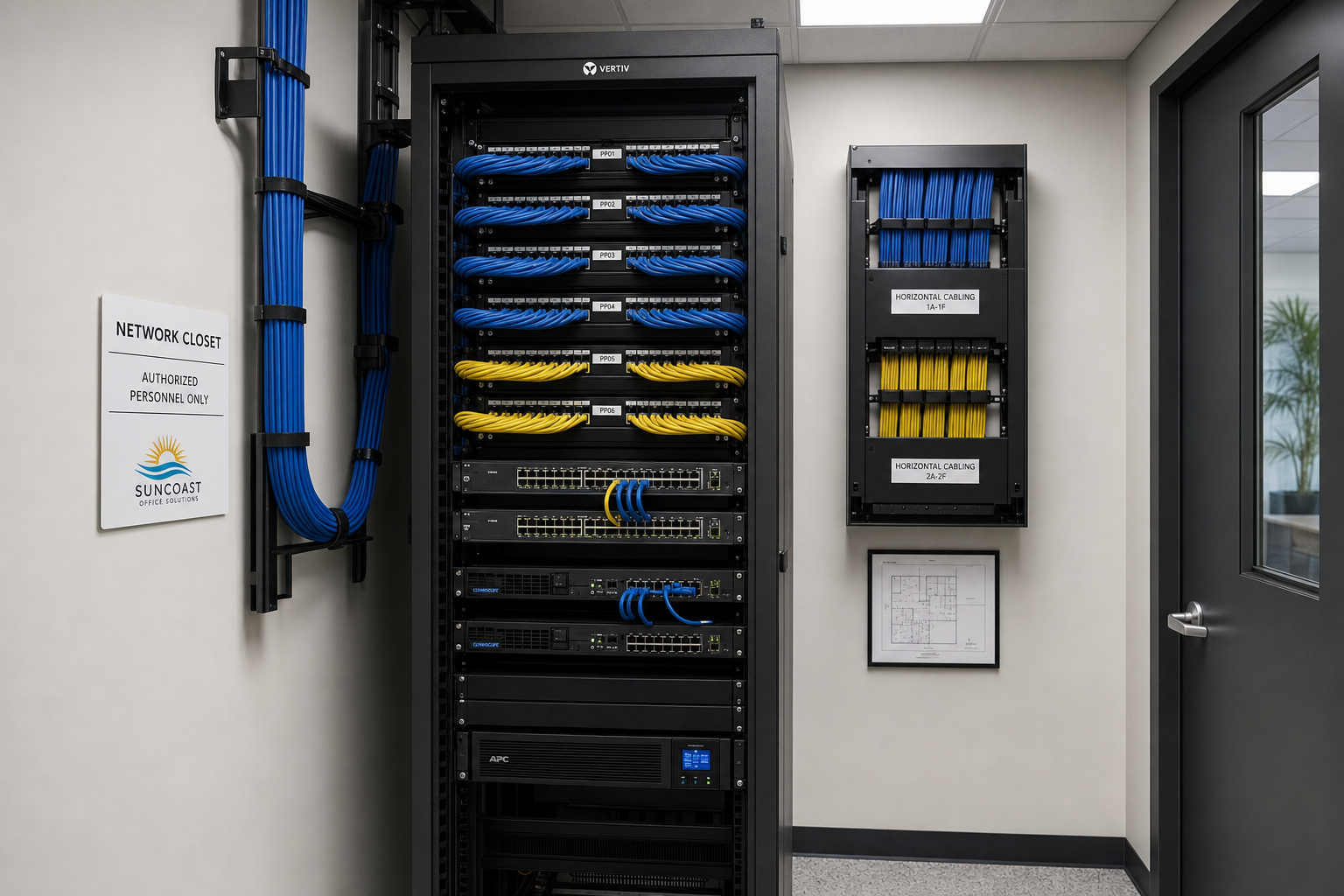
Why IT Cost-Cutting Fails After 30 Employees
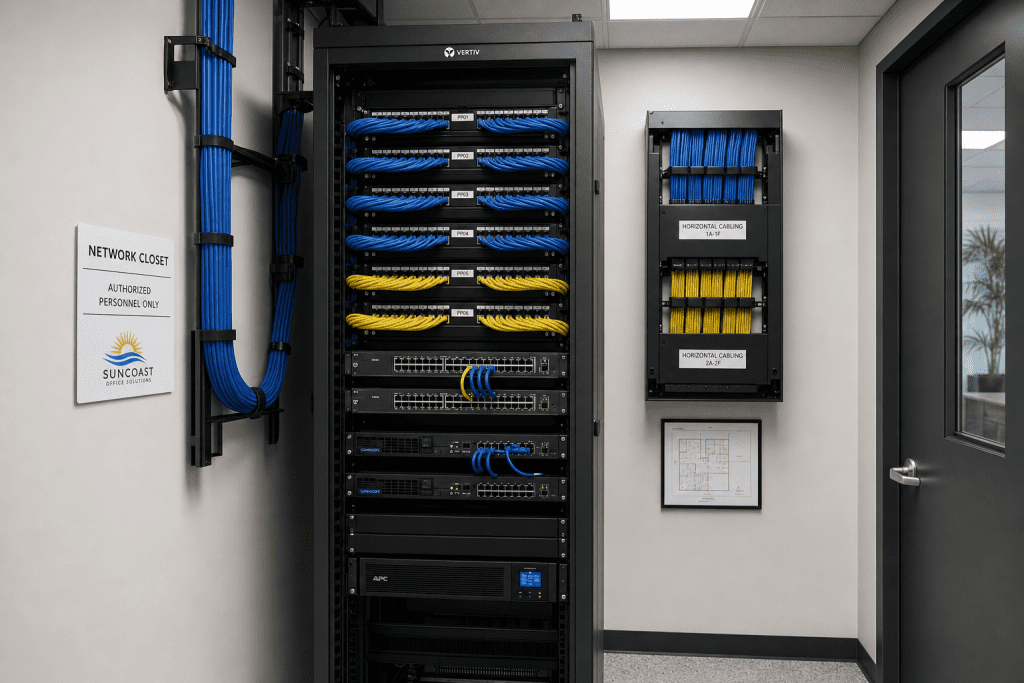
Why IT Cost-Cutting Fails After 30 Employees
You trimmed the IT budget. You patched things yourself, leaned on a cheap break-fix guy, or just waited out the problems. For a while, it worked. But somewhere around 30 employees, the wheels started coming off — and no amount of cost-cutting is fixing it anymore. Here is why that happens, and what Florida business owners are doing about it.
The Managed IT Plateau Explained
Most small businesses start with the same IT strategy: keep costs low, fix things when they break, and avoid long-term contracts. That approach is not wrong at five or ten employees. Your needs are simple, your risk is manageable, and a part-time tech or a break-fix vendor can keep things moving.
But businesses grow. And somewhere around 30 employees, the math changes completely.
You now have multiple workstations, a server or cloud environment, a phone system, a network that people actually depend on, and staff who cannot do their jobs when any of it goes down. You may have added a second location. You are probably running Microsoft 365. You might have a network closet that looks like a bowl of spaghetti.
At this stage, managed IT cost cutting stops working — not because you are doing anything wrong, but because the infrastructure has outgrown the strategy. Reactive support cannot keep up with a proactive problem. And every hour of downtime, every dropped VoIP call, every security gap is now multiplied across 30 or more people.
Your IT Support Options Compared
Before going further, here is an honest look at the options most Florida business owners are choosing between at this stage.
| Support Model | Best For | Breaks Down When | Typical Pain Points |
|---|---|---|---|
| Break-Fix / On-Call Tech | 1–15 employees, simple setups | You hit 20+ users or have a real outage | Slow response, no documentation, no accountability |
| In-House IT Staff | 50+ employees with budget for salary + benefits | One person cannot cover all specialties | Expensive, single point of failure, no VoIP or cabling expertise |
| National MSP / Big Box | Enterprise clients with standardized environments | You need local hands-on support fast | Overseas call centers, slow dispatch, no local accountability |
| Separate Vendors (IT + Phone + Cabling) | Businesses that grew without a plan | Something breaks and nobody claims it | Vendor finger-pointing, gaps in coverage, no single point of contact |
| Local Managed IT (Mynians) | 30–150 employee Florida businesses | Rarely — built for this exact stage | Flat-rate pricing, real local techs, MSP security included; VoIP and cabling quoted separately |
Why 30 Employees Is the Breaking Point
There is nothing magic about the number 30, but it represents a real operational threshold. Here is what changes at that scale.
Complexity multiplies, not adds
At 10 employees, you might have 10 workstations, one router, and a shared drive. At 30 employees, you likely have multiple switches, VLANs, a VoIP phone system, cloud services, remote workers, and a mix of devices. The number of potential failure points does not grow linearly — it compounds. A break-fix tech who handled your old setup may not have the skills or bandwidth to manage what you have now.
Downtime becomes expensive fast
When one person cannot work, it is an inconvenience. When 30 people cannot work, it is a business emergency. According to research cited by CISA, unplanned downtime and cyber incidents are among the top operational risks for small and mid-sized businesses. The cost is not just lost productivity — it is missed deadlines, frustrated clients, and staff morale damage that lingers.
Security gaps become real liabilities
A 10-person shop with a basic firewall is a low-value target. A 30-person business with customer data, financial records, and Microsoft 365 accounts is a different story. The FTC and NIST both publish guidance making clear that businesses at this size need documented security policies, not just a firewall and a prayer.
Your phone system starts failing under load
Hosted VoIP is excellent — when it is set up correctly. But if your cabling is messy, your network is not properly segmented, or your internet connection is not sized for voice traffic, call quality degrades. Dropped calls, echo, and one-way audio are not VoIP problems. They are network and cabling problems that your phone vendor will never fix because it is not their job.

The Real Problems Cost-Cutting Creates
When businesses try to stretch their old IT approach past the 30-employee mark, a predictable set of problems shows up. These are not hypothetical — they are the exact situations Mynians gets called in to fix across Central Florida, Orlando, Winter Garden, Tampa, and Jacksonville.
No documentation, no accountability
Break-fix vendors rarely document what they do. When they leave, the knowledge leaves with them. Nobody knows the network password, the server configuration, or which cable goes where. When something breaks, you are starting from scratch every time.
Vendor finger-pointing
Your internet provider blames your router. Your phone company blames your network. Your IT guy blames the phone company. Meanwhile, your staff cannot make calls and your clients are getting voicemail. This is the most common and most expensive problem at the 30-employee stage — and it happens specifically because you have separate vendors with no shared accountability.
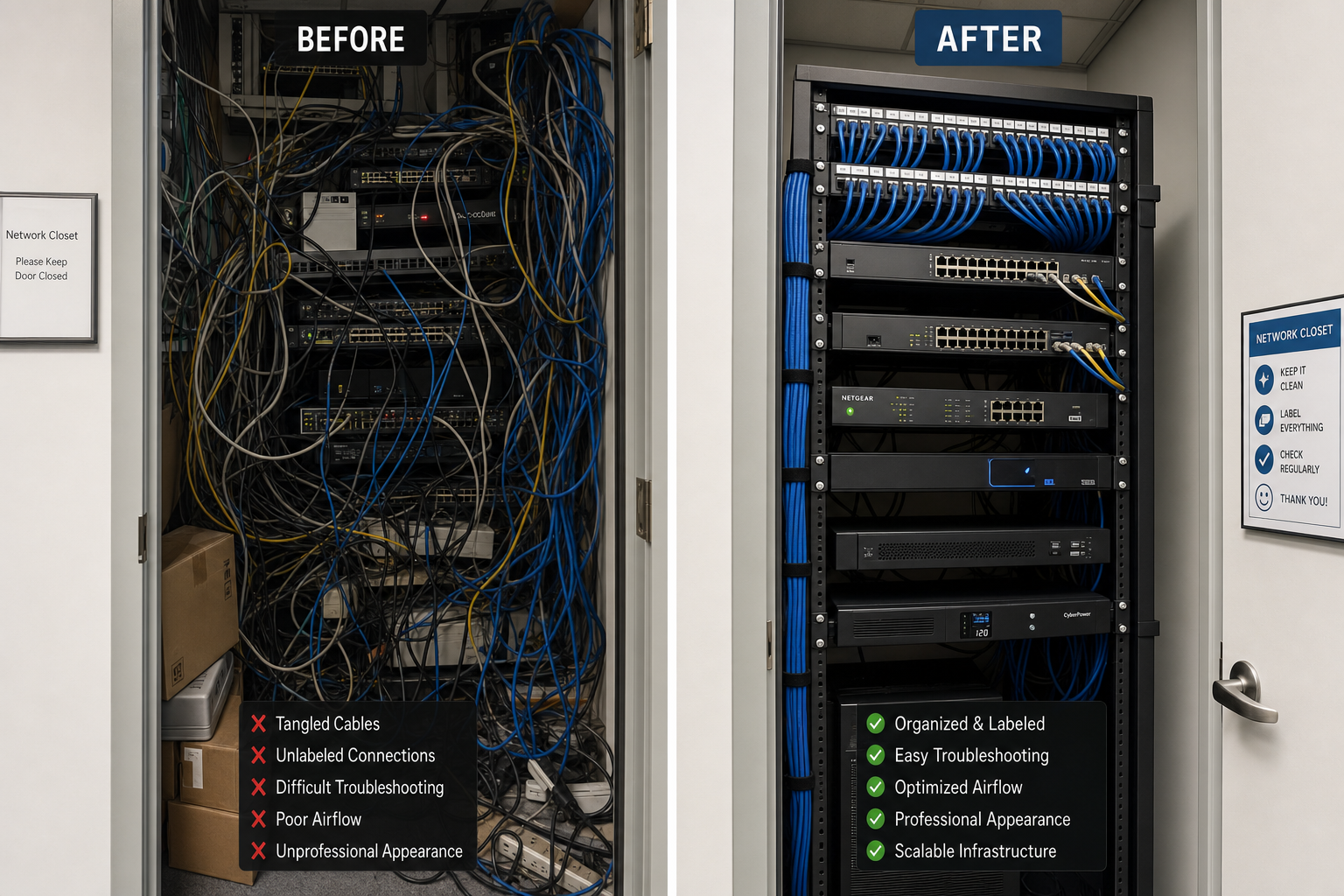
Messy network closets and bad cabling
Unmanaged growth means cables get added without a plan. Patch panels fill up with unlabeled runs. Switches get stacked on top of each other with no airflow. This is not just an aesthetic problem — it causes intermittent outages, makes troubleshooting take three times as long, and creates real fire and safety risks. Proper structured cabling, installed to BICSI standards, is not optional at this scale.
Microsoft 365 problems nobody owns
Microsoft 365 is powerful, but it requires ongoing administration — license management, security policies, conditional access, backup configuration, and more. Most break-fix vendors set it up once and walk away. At 30 employees, you need someone who actively manages it, not someone who shows up when it breaks.
Who This Is For (and Who It Is Not)
This is for you if:
- You have 25–150 employees and your IT support feels reactive and unreliable.
- You have had unexplained downtime, slow computers, or bad VoIP call quality in the last six months.
- You are paying multiple vendors for IT, phones, and cabling and nobody is talking to each other.
- You are in Central Florida — Orlando, Winter Garden, Tampa, Miami, or Jacksonville — and need local hands-on support, not an overseas call center.
- You want published base pricing with separate support and project charges at the end of the month.
- You are planning an office move, expansion, or new location and need it done right the first time.
This is NOT for you if:
- You have fewer than 10 employees and a very simple, stable setup — break-fix may still be cost-effective for you.
- You already have a dedicated in-house IT team with VoIP, cabling, and security expertise on staff.
- You are outside Florida and need on-site support — Mynians serves Central Florida businesses specifically.
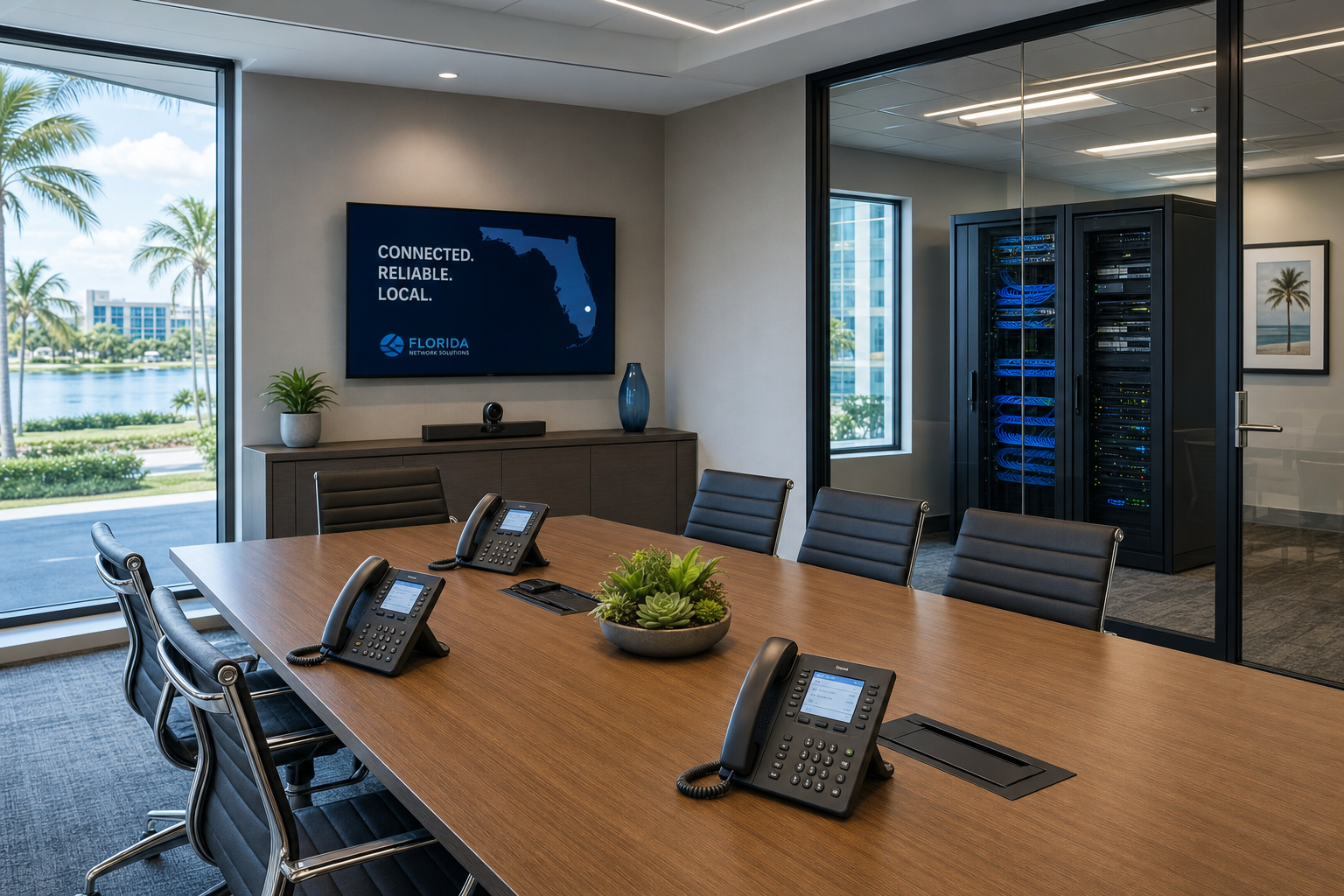
What to Do When You Hit the Plateau
If you recognize your business in this article, the path forward is straightforward — but it does require making a decision instead of waiting for the next outage to force your hand.
Step 1: Get an honest assessment of where you are
Before you can fix anything, you need to know what you actually have. That means a real audit of your network, cabling, phone system, security posture, and Microsoft 365 configuration. Not a sales pitch — an actual technical review that tells you what is working, what is not, and what the risks are.
Step 2: Consolidate your vendors
If you have separate vendors for IT, VoIP, and cabling, you have built-in finger-pointing into your support model. Moving to a single provider who handles all three eliminates the gaps and gives you one number to call when something goes wrong.
Step 3: Get your cabling and documentation in order
Clean, labeled, documented cabling is the foundation of a reliable network. If your network closet is a mess, everything built on top of it is unstable. This is not glamorous work, but it is the work that prevents the 2 a.m. outage calls.
Step 4: Move to proactive, flat-rate managed IT
Proactive monitoring means problems get caught before they become outages. Flat-rate pricing means you know exactly what you are paying every month — separate labor charges when something breaks. This is the model that makes sense at 30+ employees, and it is the model that Mynians has been delivering to Central Florida businesses for over two decades.
How Mynians Approaches This in Central Florida
Mynians is a Winter Garden, Florida IT company with over two decades of hands-on experience serving businesses across Orlando, Winter Garden, Tampa, Miami, and Jacksonville. The difference between Mynians and a national provider is simple: real local technicians, not overseas call centers. When something breaks, a real tech who knows your setup shows up — not a ticket number.
Mynians handles managed IT, hosted VoIP, structured cabling, cybersecurity, video security surveillance, cloud integration, and IT strategy under one roof. That means no vendor finger-pointing. One team and one point of contact, with a published MSP base fee, separately billed helpdesk labor, and separate written quotes for VoIP, cabling, and other projects.
The process starts with a free IT assessment — a real technical review of your environment, not a sales call. From there, Mynians builds a plan that fits your business, your budget, and your growth trajectory. Clean installs, proper documentation, and support that is built for uptime.
If you are ready to stop patching problems and start running a network that actually supports your business, reach out at mynians.com/contact-us or call (407) 374-2782.
Frequently Asked Questions
Why does managed IT cost cutting stop working at 30 employees?
At 30 employees, your IT environment has enough complexity — multiple users, devices, cloud services, VoIP phones, and security requirements — that reactive, break-fix support can no longer keep up. Downtime and security incidents start costing more than a proactive managed IT plan would, and the lack of documentation and accountability becomes a real operational risk.
What is the real cost of IT downtime for a 30-person business?
The cost is not just the repair bill — it is lost productivity across every employee who cannot work, missed client deadlines, potential data loss, and the staff time spent troubleshooting instead of doing their actual jobs. At 30 employees, even a two-hour outage can represent a significant financial hit, especially if it happens repeatedly.
Why does vendor finger-pointing happen and how do you stop it?
Vendor finger-pointing happens when your IT provider, VoIP provider, and cabling installer are separate companies with no shared accountability. When something breaks, each vendor points at the others. The fix is consolidating to a single provider who handles all three — so there is one team responsible for the whole environment and no gaps to hide in.
How long does it take to get set up with a managed IT provider?
Onboarding timelines vary depending on the size and complexity of your environment, but most businesses in the 30–60 employee range can expect a structured onboarding process that includes a full network audit, documentation, and any remediation work needed before proactive monitoring begins. Mynians will give you a clear timeline after the initial assessment.
Does Mynians serve businesses outside of Winter Garden?
Yes. Mynians serves businesses across Central Florida, including Orlando, Winter Garden, Tampa, Miami, and Jacksonville. All support is delivered by local technicians — not overseas call centers.
What is included in a free IT assessment from Mynians?
A free IT assessment from Mynians is a real technical review of your current environment — your network, cabling, phone system, security posture, and cloud services. You will get honest findings and a clear picture of where your risks are. There is no obligation and no pressure. Call (407) 374-2782 or visit the contact page to get started.
Update Log
- May 2026: Created and reviewed for Mynians managed IT, hosted VoIP, and structured cabling accuracy.
Next step
Ready to see what managed IT would cost your business?
Calculate your MSP base in about a minute, review the written agreement, and sign online, or call the Winter Garden team and talk it through first.