
Managed IT Compliance Plan for HIPAA and PCI Offices
HIPAA & PCI Managed IT Compliance Plan
If your office handles patient records or processes credit cards, your IT infrastructure is not just a convenience—it is a compliance requirement. Practice managers and retailers across Central Florida are navigating HIPAA and PCI DSS rules while also keeping daily operations running. A managed IT compliance plan for HIPAA and PCI offices gives you a documented, maintained, and locally supported technology foundation that satisfies auditors and keeps your business moving.
Who This Is For—and Who It Is Not
This guide is for you if:
- You manage a dental, optometry, chiropractic, or other professional office that stores or transmits protected information covered under HIPAA.
- You run a retail location, restaurant group, or service business that accepts credit cards and falls under PCI DSS scope.
- You are a practice manager or operations lead in the Orlando, Winter Garden, Tampa, Miami, or Jacksonville area trying to balance daily operations with compliance requirements.
- You have received an audit notice, a vendor questionnaire, or a cyber insurance renewal that is asking about your IT controls.
- Your current IT setup is a patchwork of old equipment, undocumented cabling, and a break-fix vendor who shows up when things break.
This guide is NOT for you if:
- You are a large enterprise with a dedicated in-house compliance and IT security team already running a mature program.
- You are looking for legal or regulatory counsel—this is an IT operations guide, not legal advice.
- You are outside Florida and need a provider with local on-site capability in your region.
Compliance IT Support Options Compared
Before building a plan, it helps to understand what your options actually look like side by side.
| Option | On-Site Support | Compliance Documentation | Predictable Cost | Single Vendor for IT + VoIP + Cabling | Local Florida Presence |
|---|---|---|---|---|---|
| Mynians Managed IT | Yes — real local techs | Available by separate written quote | Yes — flat-rate | Yes | Yes — Central Florida |
| National MSP | Rarely — mostly remote | Sometimes — add-on cost | Varies | Rarely | No |
| Break-Fix Vendor | Yes — but reactive only | No | No — unpredictable bills | No | Sometimes |
| In-House IT Staff | Yes | Depends on expertise | No — salary + tools | Rarely | Yes |
| Separate Vendors (IT, VoIP, Cabling) | Split responsibility | No unified documentation | No — multiple invoices | No | Varies |
The separate-vendor model is one of the most common problems Mynians encounters when taking over an account. When the network goes down and the IT vendor blames the cabling company, who blames the VoIP provider, your staff is stuck in the middle. One team for all three eliminates that finger-pointing entirely.
What HIPAA and PCI Actually Require from Your IT
Both frameworks share a common thread: you must be able to prove your controls exist and that someone is actively maintaining them. Good intentions do not satisfy an auditor. Documentation does.
HIPAA IT Requirements (Technical Safeguards)
- Access controls: Only authorized users can access protected data. This means unique user accounts, role-based permissions, and automatic logoff on workstations.
- Audit controls: Hardware and software must record activity in systems that contain protected information. Logs must be retained and reviewable.
- Integrity controls: Data must not be altered or destroyed without authorization. Backup systems and file integrity monitoring address this.
- Transmission security: Any data moving across a network must be encrypted. This includes email, VoIP calls carrying sensitive information, and remote access sessions.
The Cybersecurity and Infrastructure Security Agency (CISA) publishes practical guidance on protecting sensitive data in business environments that aligns well with these requirements.
PCI DSS IT Requirements (Key Controls)
- Network segmentation: Cardholder data must live on a separate network segment, isolated from general business traffic and guest Wi-Fi.
- Firewall management: Firewalls must be configured, documented, and reviewed regularly. Default vendor passwords must be changed.
- Patch management: All systems in scope must receive security patches within defined timeframes.
- Vulnerability scanning: Quarterly internal and external scans are required for most merchants.
- Incident response: A written plan must exist for what happens when a breach is suspected.
The National Institute of Standards and Technology (NIST) Cybersecurity Framework is a practical reference that maps well to both HIPAA and PCI requirements and is worth reviewing with your IT provider.
The Managed IT Compliance Project Plan
Here is how Mynians approaches a compliance-focused IT engagement for a Florida office. This is a practical sequence, not a sales pitch.
Phase 1: Discovery and Risk Assessment (Weeks 1–2)
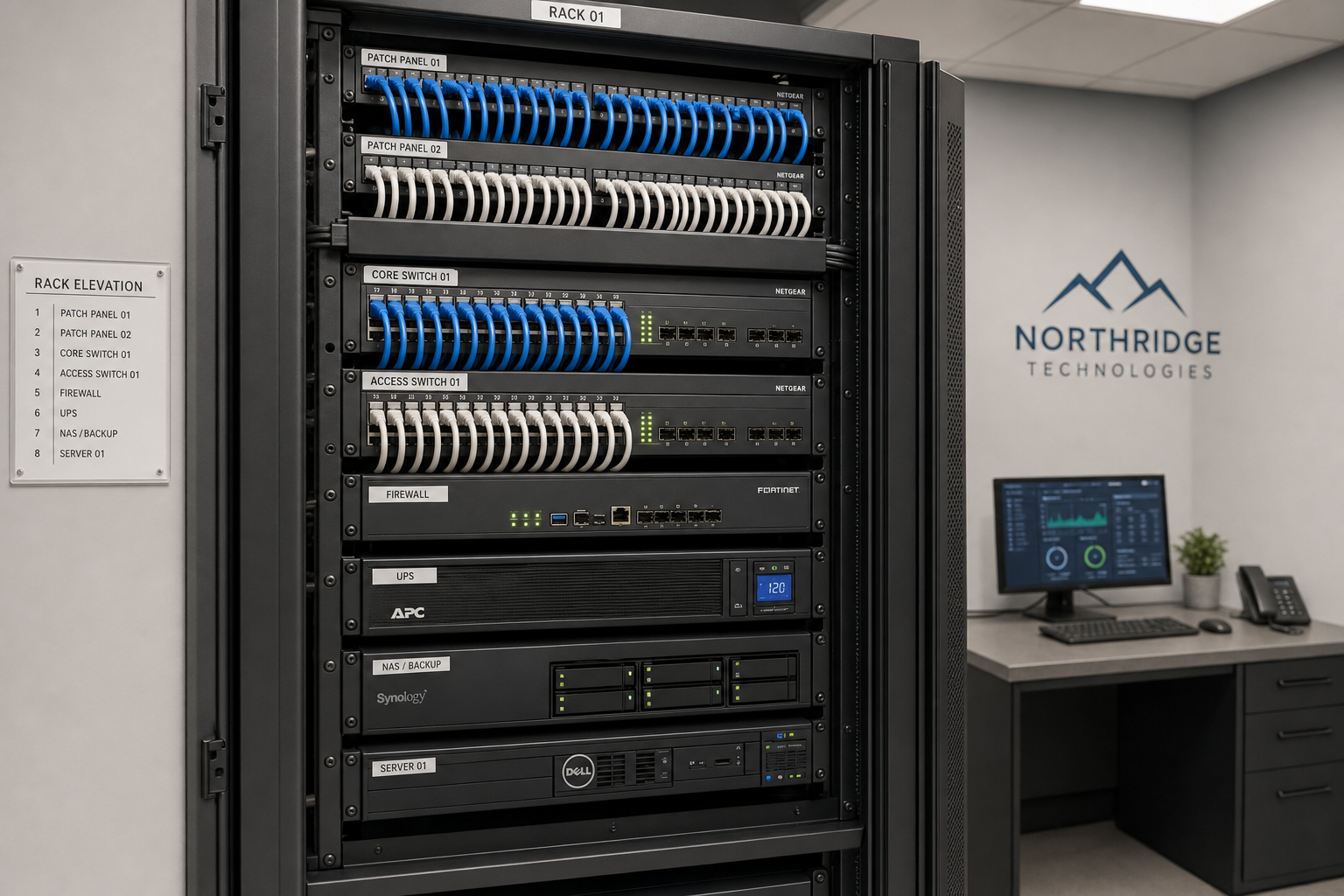
- Inventory all devices, servers, workstations, printers, and network equipment.
- Map data flows—where does protected or cardholder data enter, move, and rest?
- Review existing firewall rules, user accounts, and remote access configurations.
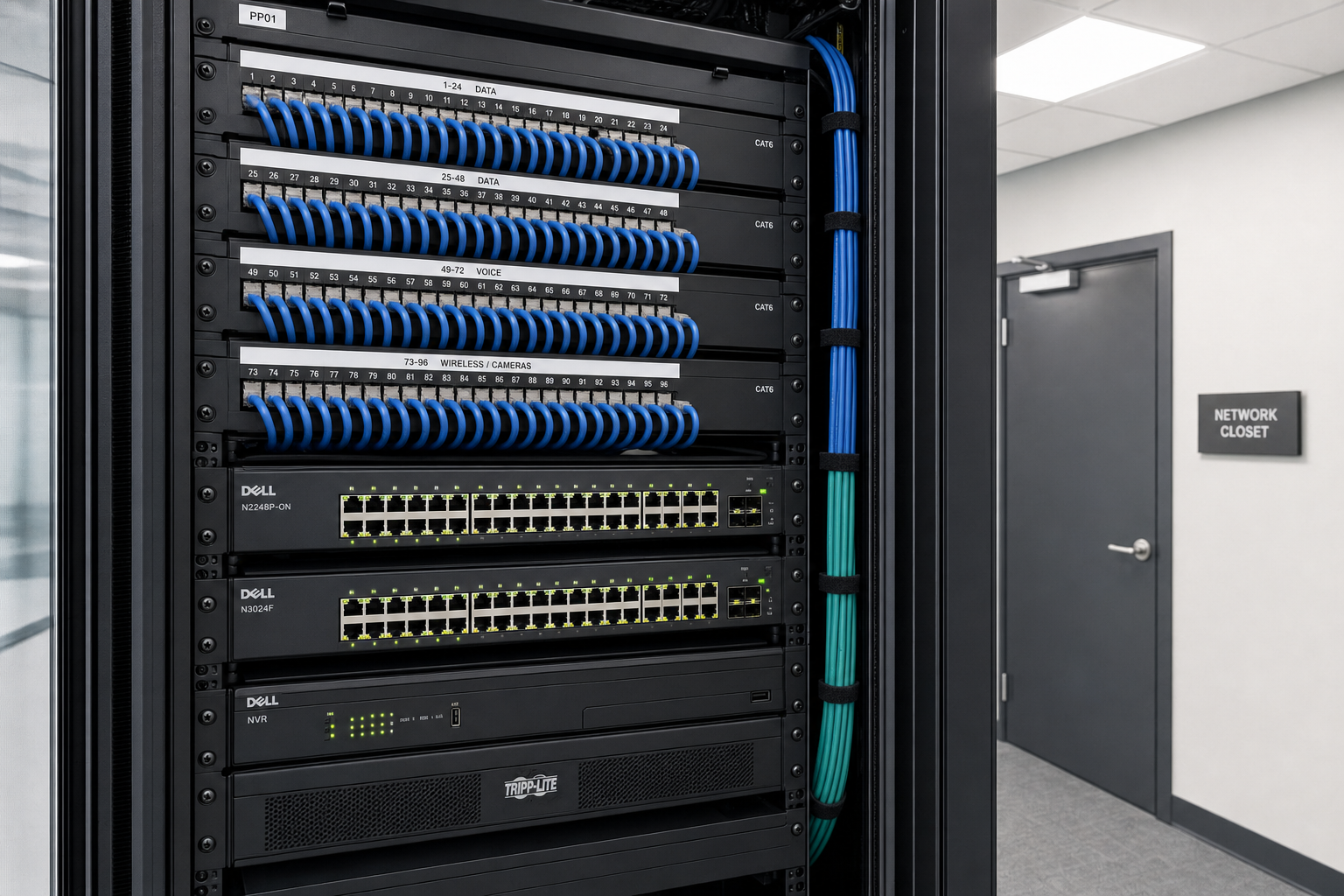
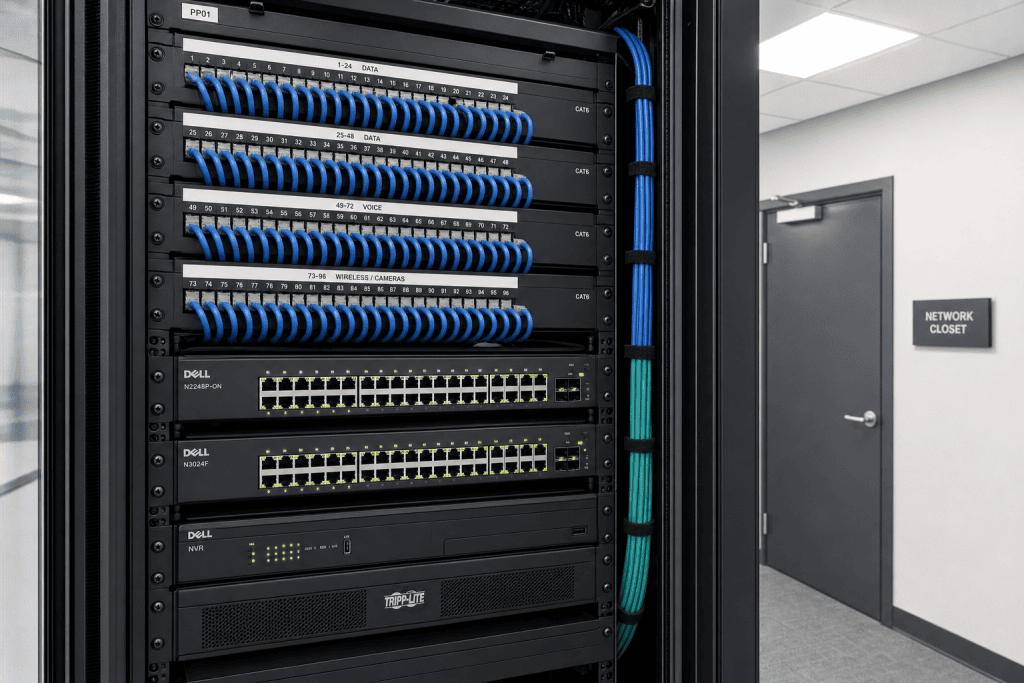
- Photograph and document the network closet. Messy, unlabeled cabling is a compliance risk and an operational one.
- Identify gaps between current state and what HIPAA or PCI requires.
Phase 2: Remediation and Infrastructure Cleanup (Weeks 3–6)
- Segment the network. Cardholder data environments and systems containing protected information get their own VLAN, isolated from general office traffic and guest Wi-Fi.
- Replace or reconfigure firewalls with documented rule sets. Default credentials are eliminated.
- Deploy endpoint protection on all in-scope workstations and servers.
- Establish automated patch management so security updates are applied consistently.
- Clean up user accounts. Remove former employees, enforce unique credentials, and implement multi-factor authentication on remote access and email.
- Organize and label structured cabling. Every run gets documented with a proper diagram.
Phase 3: Policy Documentation (Weeks 4–6, Parallel)
- Draft or update the written information security policy.
- Document the incident response plan—who gets called, in what order, and what gets logged.
- Create the acceptable use policy for staff.
- For HIPAA-covered offices, execute a Business Associate Agreement (BAA) with Mynians as a service provider touching covered systems.
Phase 4: Monitoring and Ongoing Maintenance (Month 2 Onward)
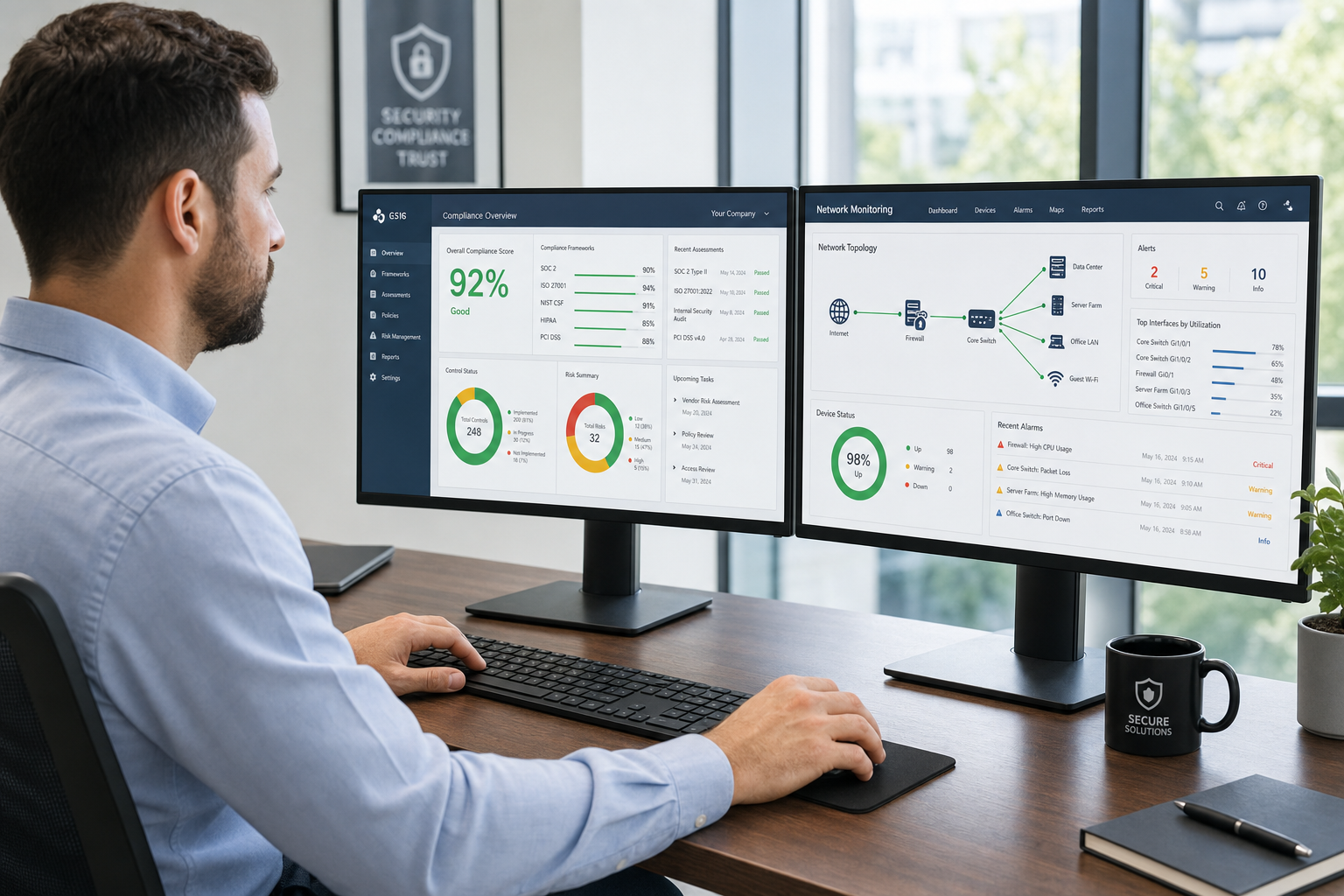
- Enable centralized log collection and review. Audit logs are retained per framework requirements.
- Schedule quarterly vulnerability scans for PCI-scoped environments.
- Monthly patch review and confirmation reporting.
- Annual risk assessment review to catch new gaps as the business changes.
- Staff security awareness reminders—phishing is still the most common entry point for breaches in small offices.
VoIP and Cabling in a Compliance Environment
Most compliance conversations focus on servers and workstations. VoIP phone systems and structured cabling are frequently overlooked—and that is a problem.
Hosted VoIP and HIPAA
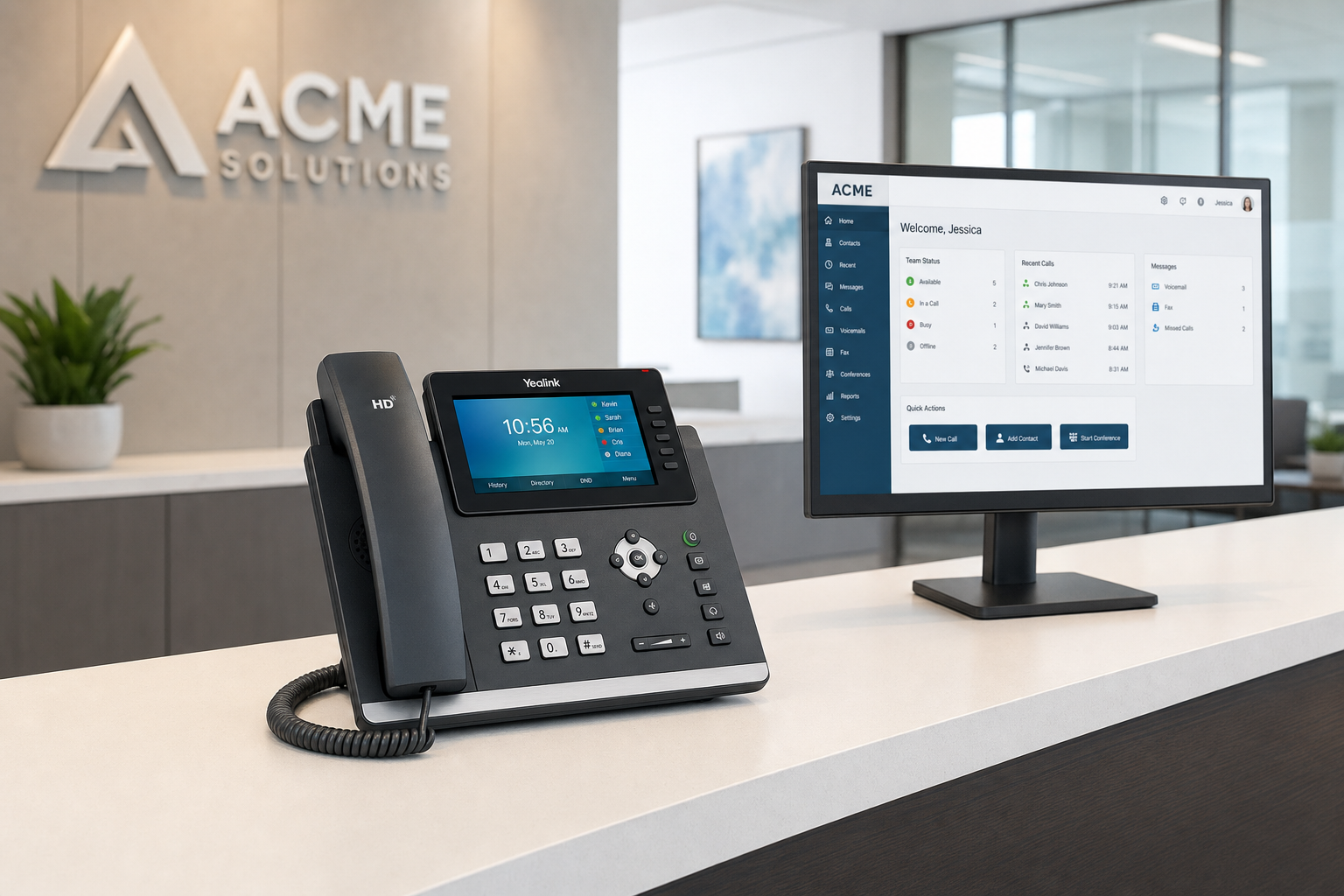
If your office discusses patient information over the phone—scheduling, billing, referrals—your VoIP system is in scope. That means your VoIP provider must sign a Business Associate Agreement, and the system must support encrypted call signaling. Mynians provides hosted VoIP built for business environments, and we can execute the necessary agreements for covered offices. A consumer-grade VoIP app or a legacy analog system does not meet this bar.
Structured Cabling and Network Segmentation
Network segmentation only works if the physical cabling supports it. If your patch panel is a mess of unlabeled cables running across multiple VLANs with no documentation, your segmentation is theoretical at best. Mynians handles structured cabling as part of the same engagement—clean installs, labeled runs, proper documentation—so your physical infrastructure matches your logical security design.
The Building Industry Consulting Service International (BICSI) sets the professional standards for structured cabling installations that compliance-conscious offices should expect from any cabling work.
Common Mistakes That Trigger Audits and Findings
- Shared user accounts: Multiple staff members logging in with the same credentials makes audit logging useless. You cannot trace an action to a person.
- Flat networks: Everything on one network segment means a compromised point-of-sale terminal can reach your file server. Segmentation is not optional for PCI.
- Unpatched systems: A workstation running an outdated operating system in a compliance environment is a finding waiting to happen. Patch management must be automated and verified.
- No written incident response plan: Both HIPAA and PCI require a documented plan. “We would call our IT guy” is not a plan.
- Undocumented remote access: Remote desktop tools installed by previous vendors, personal devices connecting to office systems, and unmanaged VPN configurations are common in Florida offices that have changed IT providers.
- Ignoring the phone system: VoIP systems that carry sensitive conversations without encryption or a BAA are a compliance gap that is easy to miss and hard to explain to an auditor.
Why Local Support Matters in Florida
National managed IT providers can handle remote monitoring and ticket queues. What they cannot do is show up at your Winter Garden office on a Tuesday afternoon when your network switch fails and your staff cannot process payments or access records. Remote support has limits. On-site support does not.
Mynians serves businesses across Central Florida—Orlando, Winter Garden, Tampa, Miami, and Jacksonville—with real local technicians who know your office, your equipment, and your setup. When something needs hands on it, we send someone. No overseas call center. No ticket escalation to a team that has never seen your network closet.
For compliance specifically, local presence matters because:
- Physical security of network equipment requires on-site verification.
- Cabling documentation requires someone to physically trace and label runs.
- Staff training and security awareness is more effective in person.
- Incident response sometimes requires immediate on-site containment.
Flat-rate pricing means your compliance IT budget is predictable. Automated patching is included in the MSP base; vulnerability assessments, compliance projects, and user-requested remediation labor require separate billing or written quotes. We fix the mess, secure the system, and keep it running—month after month.
The Federal Trade Commission (FTC) also enforces data security requirements for businesses that handle consumer information, which overlaps with PCI and HIPAA obligations for many Florida retailers and service providers.
Frequently Asked Questions
How long does it take to get a HIPAA or PCI compliant IT environment set up?
For most small to mid-size Florida offices, the remediation and documentation phase takes four to six weeks depending on the current state of your infrastructure. Offices with messy cabling, undocumented networks, or outdated equipment take longer. Ongoing compliance maintenance begins immediately after remediation and continues month to month.
Does Mynians sign a Business Associate Agreement for HIPAA-covered offices?
Yes. For offices where Mynians manages or has access to systems that store or transmit protected information, we execute a Business Associate Agreement as part of the engagement. This is a standard requirement and we handle it as part of onboarding.
What is the difference between HIPAA and PCI compliance from an IT standpoint?
HIPAA focuses on protecting health-related information and applies to covered entities and their business associates. PCI DSS focuses on protecting cardholder data and applies to any business that accepts, processes, or stores credit card payments. Many Florida offices—particularly those in professional services or retail—need to address both. The IT controls overlap significantly: access controls, encryption, patch management, audit logging, and incident response are required by both frameworks.
Can Mynians handle our VoIP system as part of the compliance plan?
Yes. Mynians provides hosted VoIP as part of its service offering. For compliance environments, we configure VoIP systems with encrypted signaling, proper network placement, and the documentation required for HIPAA or PCI scope. This eliminates the vendor finger-pointing that happens when your IT provider and your phone provider are separate companies.
What happens after I reach out to Mynians?
We start with a free IT assessment. A real local technician reviews your current setup, identifies compliance gaps, and gives you a clear picture of what needs to be done and what it will cost. There is no obligation and no surprise fees. From there, if it is a good fit, we define the MSP base and a separate written scope for compliance services. Certification, regulatory compliance, and all user-facing support are not included or guaranteed by the MSP base.
Is managed IT compliance support affordable for a small office?
Flat-rate managed IT pricing makes compliance support predictable. You know what you are paying each month. Compare that to the cost of a break-fix vendor who bills by the hour, a data breach response, or a compliance fine—and managed IT is typically the more cost-effective path. The free IT assessment will give you a clear number based on your actual environment.
Update Log
- May 2026: Created and reviewed for Mynians managed IT, hosted VoIP, and structured cabling accuracy.
Next step
Ready to see what managed IT would cost your business?
Calculate your MSP base in about a minute, review the written agreement, and sign online, or call the Winter Garden team and talk it through first.